

RWANDA CARBON MARKET PROFILE 2026
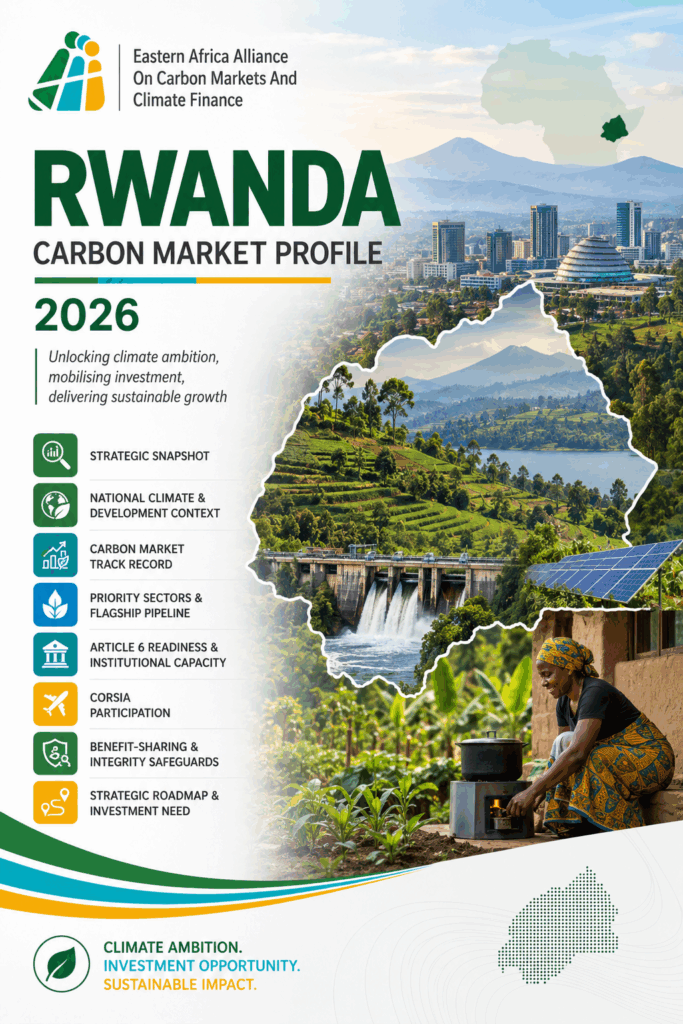
Executive Summary Rwanda is one of Africa’s leading policy-ready and institutionally credible carbon market hosts, with a clear intent to deploy carbon markets as an integrity-driven instrument in support of national climate and development objectives. The country enters the Article 6 era with a proven track record in mobilising climate and nature finance, and market […]
ETHIOPIA CARBON MARKET PROFILE 2026
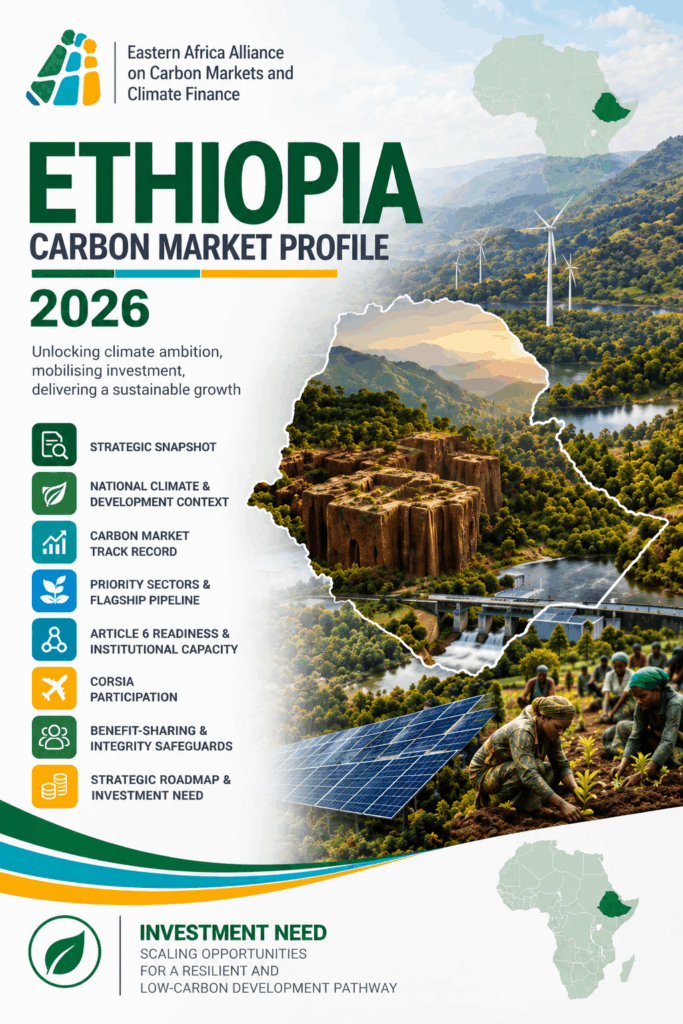
Executive Summary Ethiopia has streamlined climate action into its National Development Planning, anchored in long-standing political commitment and operationalised through the Climate-Resilient Green Economy (CRGE), launched in 2011, the National Adaptation Plan, the National Carbon Market Strategy (2025-2035), the long-term Low Emission and Climate Resilient Development Strategy (2020-2050), and its Nationally Determined Contribution 3.0 (NDC […]
BURUNDI CARBON MARKET PROFILE 2026
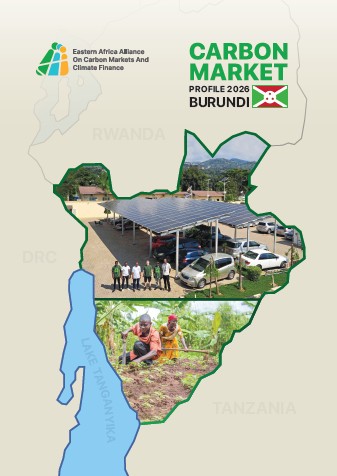
Burundi was one of the first six members of the Eastern Africa Alliance on Carbon Markets and Climate Finance, demonstrating an early commitment to leveraging carbon markets for climate action and sustainable development. The country has significant carbon market potential, mainly through nature-based solutions, clean cooking, climate-smart agriculture, renewable energy, and ecosystem restoration. As Burundi […]
Méthodes de renforcement des capacités des organismes de validation et de vérification en Afrique
The Pathways for Strengthening Validation and Verification Body (VVB) Capacity in Africa was produced by Perspectives Climate Group, commissioned by Deutsche Gesellschaft für Internationale Zusammenarbeit (GIZ) through the Global Carbon Market Project and the Voluntary Carbon Markets Integrity Initiative (VCMI) under its Access Strategies program. The report identifies structural bottlenecks such as shortages of qualified […]
Pathways for Strengthening Validation and Verification Body
The Pathways for Strengthening Validation and Verification Body (VVB) Capacity in Africa was produced by Perspectives Climate Group, commissioned by Deutsche Gesellschaft für Internationale Zusammenarbeit (GIZ) through the Global Carbon Market Project and the Voluntary Carbon Markets Integrity Initiative (VCMI) under its Access Strategies program. The report identifies structural bottlenecks such as shortages of qualified […]
Annex 1: Carbon Market Opportunities and Technologies Study
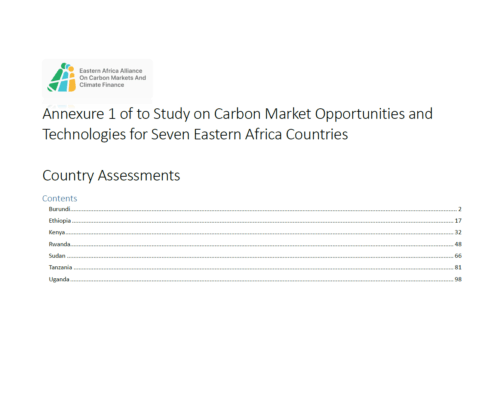
Annexure 1 of to Study on Carbon Market Opportunities and Technologies for Seven Eastern Africa Countries
Full Report: Carbon Market Opportunities and Technologies Study
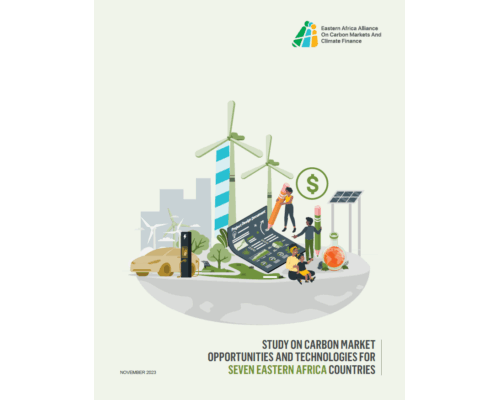
Markets and Climate Finance (EAA) in considering and prioritising mitigation technologies and project activities on the path to the operationalisation of Article 6 of the Paris Agreement. The study encompasses seven countries, namely Burundi, Ethiopia, Kenya, Rwanda, Sudan, Tanzania, and Uganda. The prioritisation of mitigation technologies or activities could assist countries in developing technology “positive […]
Summary: Carbon Market Opportunities and Technologies Study
Markets and Climate Finance (EAA) in considering and prioritising mitigation technologies and project activities on the path to the operationalisation of Article 6 of the Paris Agreement. The study encompasses seven countries, namely Burundi, Ethiopia, Kenya, Rwanda, Sudan, Tanzania, and Uganda. The prioritisation of mitigation technologies or activities could assist countries in developing technology “positive […]
A Blueprint for Engaging in Cooperative Approaches Under Article 6 of the Paris Agreement
At COP26, Parties adopted a set of Decisions to underpin and enable international cooperation under Article 6 of the Paris Agreement, including through the use of carbon markets. These Decisions provide a framework for Parties to transfer ‘mitigation outcomes’ generated within their jurisdiction for use by other Parties or entities, or for Parties to use […]
Carbon Market Profile – Burundi

Burundi’s Nationally Determined Contribution (NDC) aims at reducing greenhouse gas (GHG) emissions by around 16.86 million tCO2e by 2030, or a reduction of emissions by 23% compared to the projected business as usual (BAU) scenario. Around 1.96 MtCO2e is planned to be reduced through domestic measures whereas around 14.89 MtCO2e reduction will be conditional on […]